
Cern Basher
Twitter
观点
Bitcoin isn’t just Internet Money
It might actually be a new kind of power - like a digital weapon or shield that countries can use to protect themselves online.
In a Age of AI Agents - we're going to need an effective digital shield!
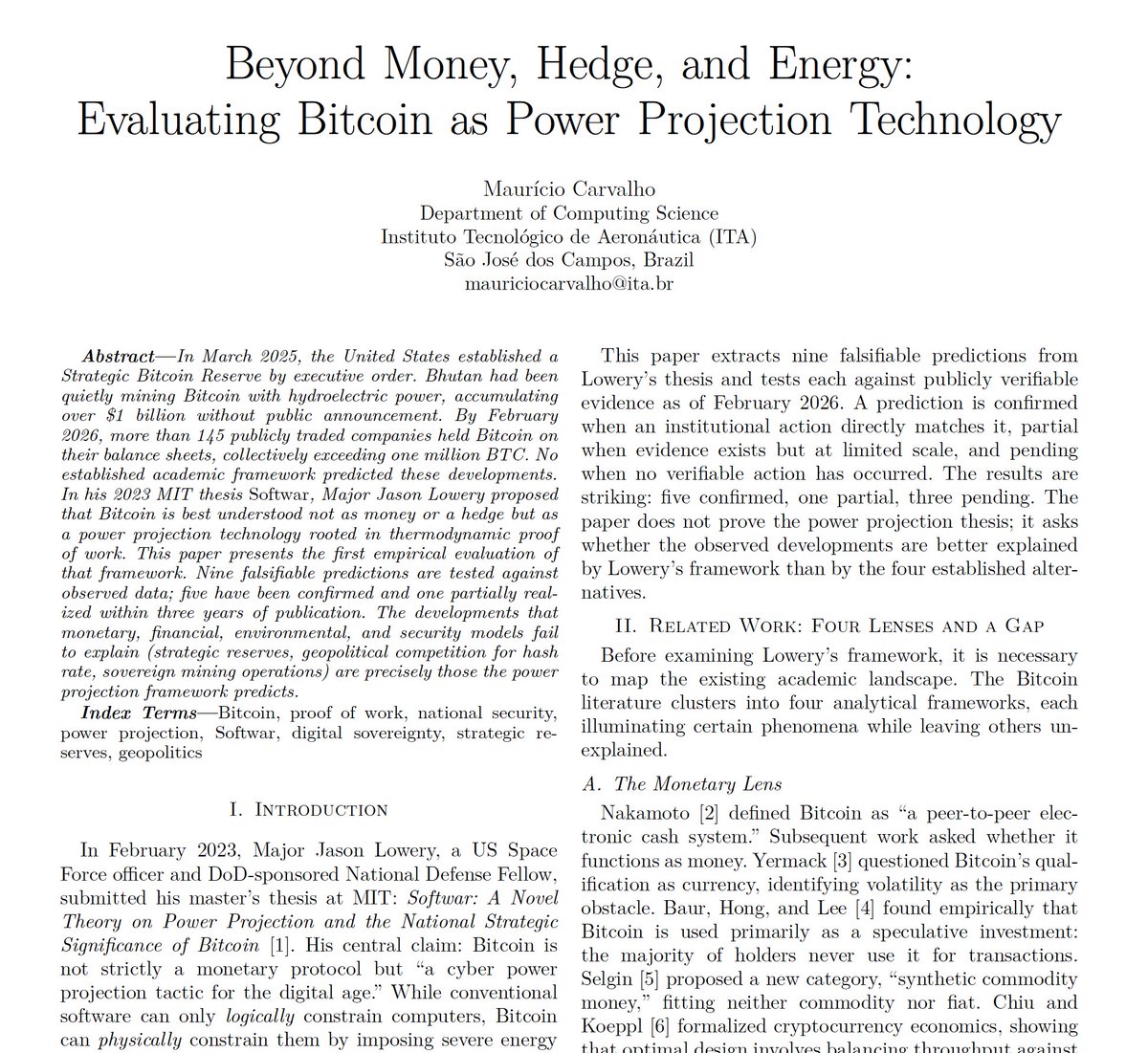
The author of a new paper: "Beyond Money, Hedge, and Energy: Evaluating Bitcoin as Power Projection Technology" evaluates Jason Lowery's 2023 "SOFTWAR" theory that said Bitcoin should be understood as a way to project physical power into cyberspace.
Normally, computers run on “rules” and software. But Bitcoin works differently. It uses huge amounts of real electricity and energy to secure its network. That means attacking Bitcoin isn’t just about hacking code - you would have to spend massive amounts of real-world energy and money to overpower it. The paper tests whether that theory was right by looking at what happened between 2023 and 2026.
Here’s what actually happened:
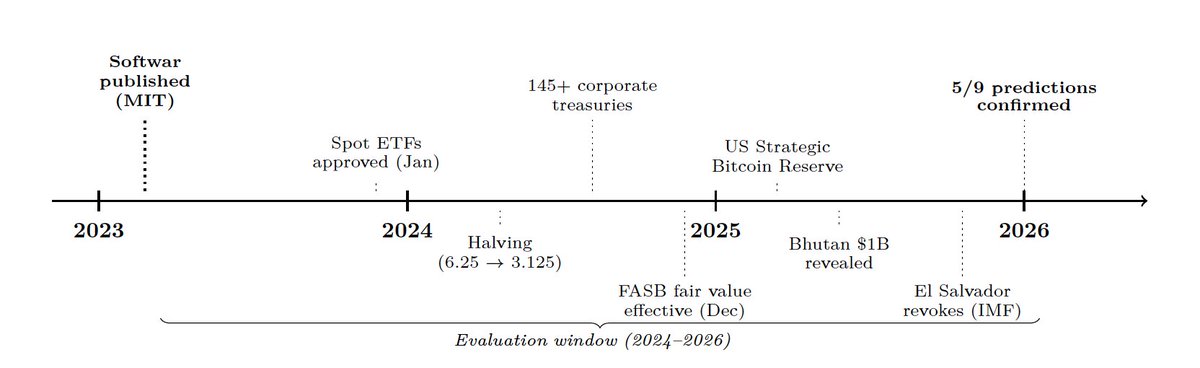
1) The United States created a Strategic Bitcoin Reserve (basically treating Bitcoin like a national resource, similar to oil).
2) Countries like Bhutan secretly mined Bitcoin using hydroelectric power.
3) Over 145 public companies added Bitcoin to their balance sheets.
4) Huge investment funds (like BlackRock’s Bitcoin ETF) bought tens of billions of dollars worth.
5) Global Bitcoin mining power (called “hash rate”) hit record highs - even while the price dropped.
That’s important. The price of Bitcoin fell about 46% during this time. But governments and big institutions were buying more of it anyway. According to the paper, that suggests they may see Bitcoin as something strategic - not just an investment.
The paper says older ways of thinking about Bitcoin don’t explain this behavior:
It’s not just money.
It’s not just a speculative investment.
It’s not just bad for the environment.
It’s not just a tech experiment.
Instead, the author says Bitcoin may be more like digital territory protected by energy. If you control energy and computing power, you help protect the network. Countries might compete for that power the same way they compete for oil, weapons, or technology.
The paper checked nine predictions made in 2023 about what would happen if Bitcoin really was a “power projection technology.” Five of those predictions already came true. One partly happened. Three haven’t happened yet.